Identify who is deciding and what they need to achieve.
Whether an idea is worth pursuing depends on whose resources are at stake and what they are trying to achieve.

Clear reasoning and practical experimentation belong together. We find what matters, test the options and help put a useful answer into practice.
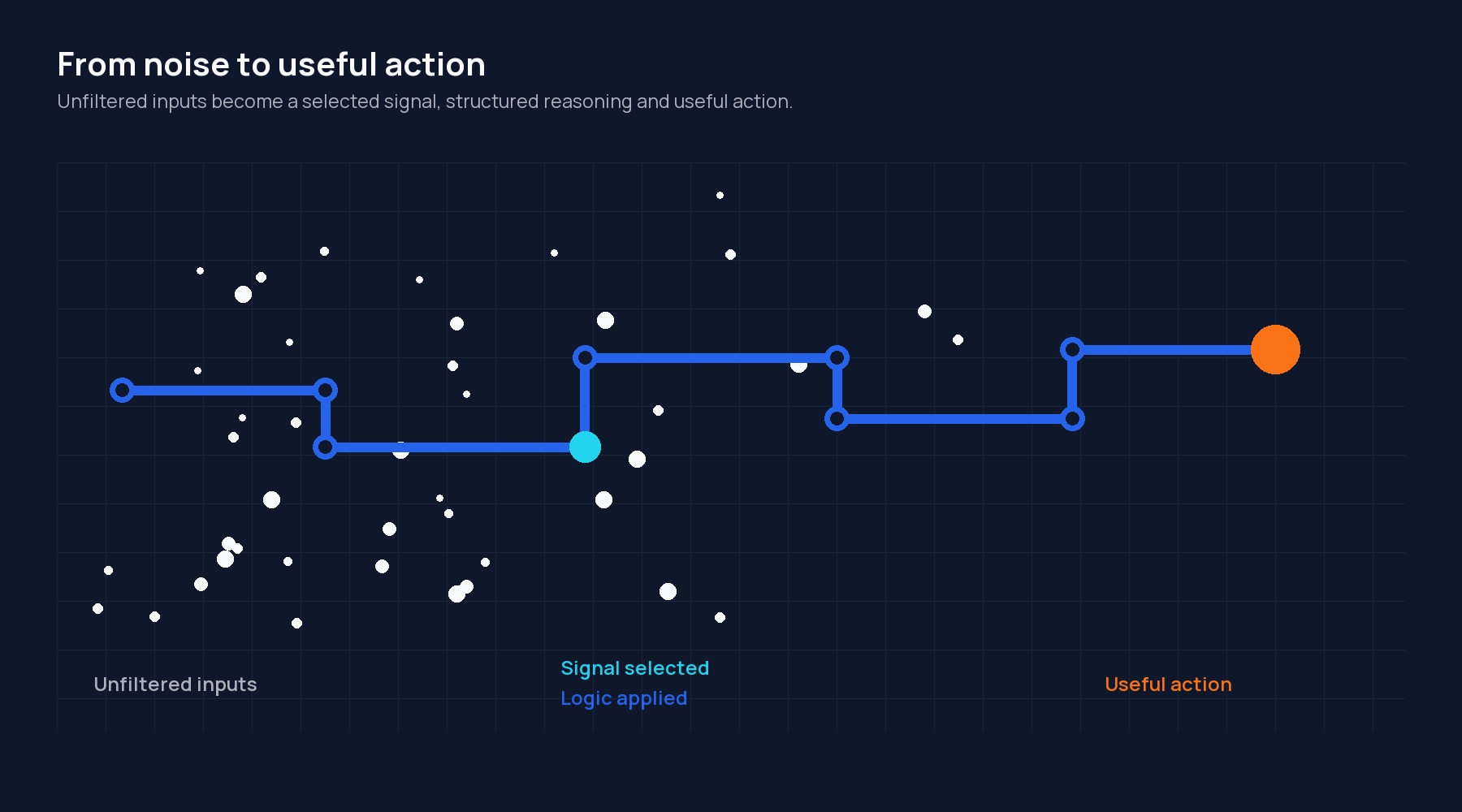
As we learn, we may change what we recommend or build. We keep the intended outcome clear.
Identify the relevant need, cause, opportunity or constraint. Separate evidence from activity, assumptions and noise.
Examine facts, options, value, trade-offs and consequences. Account for commercial, organisational and technical reality.
Experiment, model, simulate, prototype, improve or build where it helps. Use the result to strengthen the next decision.
Move into a decision, operating change, implementation, tool or product when justified. People retain judgement and accountability.
Whether an idea is worth pursuing depends on whose resources are at stake and what they are trying to achieve.
A promising response may deserve a small experiment before a full rollout. A manageable build does not make the idea worthwhile.
Include responsibilities, handoffs, rules, failures and recovery. The response has to work beyond the presentation.
Choose AI, automation or code where it helps meet the need. Review the result against the intended outcome and keep important decisions with people.
Start with the question that most affects your decision. Choose a practical way to answer it before committing more time or money.
That might be an interview, a model, a working prototype or a controlled trial. It might also be a decision to stop. The next step should produce evidence that changes what you do.

